Quiet Forms of Love: On Shared Journeys, Familiar Land, and the Colour of Warmth
Love is often spoken about as arrival — a moment, a declaration, a turning point. But lived love is something else entirely. It is movement. It is walking alongside someone, sometimes towards something new and exhilarating, but more often back to familiar land. The roads we know. The paths we return to. The places that hold memory, habit, and shared time.
This February — a month that tends to frame love loudly — I found myself thinking about love in quieter terms.
Shared journeys.
Companionship without spectacle.
The warmth that settles into a landscape when it has been walked many times before.
1st February also carries personal meaning for me. It is the wedding anniversary of dear friends who, many years ago, asked me to read Elizabeth Barrett Browning’s How do I love thee? at their wedding.
How do I love thee? Let me count the ways.
I love thee to the depth and breadth and height
My soul can reach, when feeling out of sight
For the ends of being and ideal grace.
I love thee to the level of every day’s
Most quiet need, by sun and candle-light.
What has stayed with me over the years is not the grandeur of that poem, but its attentiveness to the ordinary — the level of every day’s most quiet need. Love expressed not only in passion, but in repetition, presence, and endurance.
For the month of love, I’ve selected four original works that speak to me of love in these quieter ways. They are paintings about movement rather than destination, about togetherness rather than drama, and about atmosphere — emotional as much as visual.
Each work began with a different impulse — a place, a moment, a relationship — and only later revealed a shared visual language. Looking at them together now, it’s possible to see how intuition, narrative, and colour are quietly intertwined.
In particular, I’m struck by how consistently pink appears — not as a dominant statement, but as a carrier of feeling. It wasn’t a deliberate decision. I didn’t set out to “use pink” as a theme. But as with relationships, intuition often leads before understanding follows, and it’s only in hindsight that patterns reveal themselves.
In painting, colour operates on two levels at once. There is the emotional register — how a colour feels — and the technical one — how it behaves in relation to other colours, light, and space. Pink, for me, seems to sit at the intersection of those two.
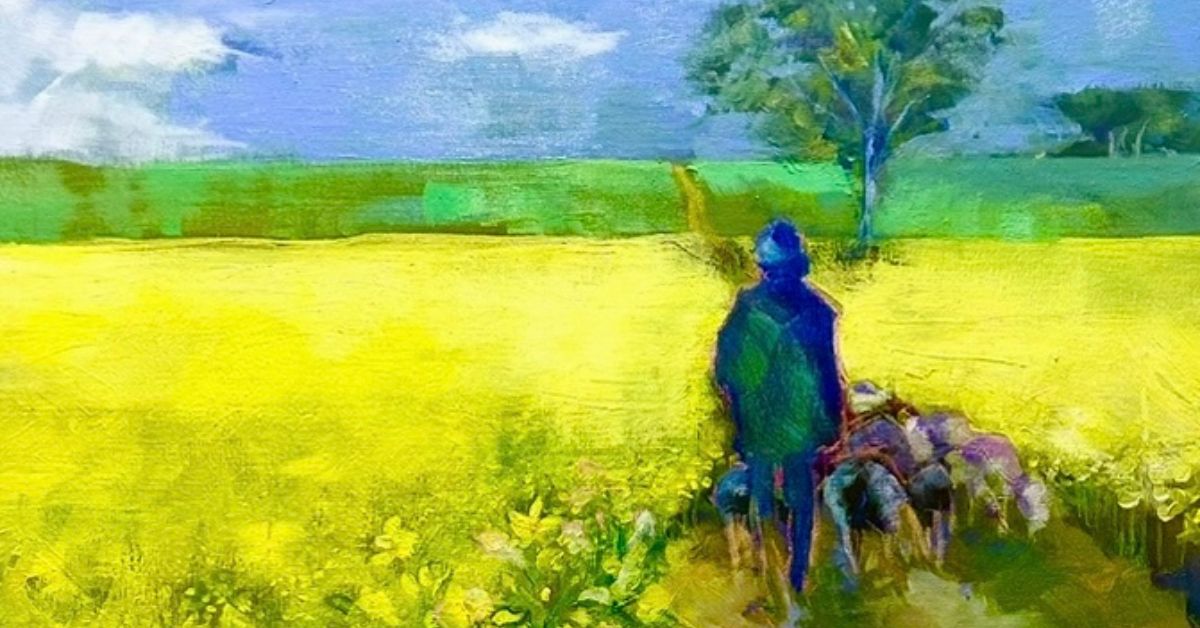
The Road to Creation grew out of time spent travelling with a dear friend through familiar Overberg landscapes — conversations unfolding slowly, movement shared rather than hurried. The road itself becomes a companion rather than a device for arrival. Pink moves through the road itself, warming the ground beneath the figures. Emotionally, it softens what could otherwise be a stark or solitary journey. Technically, it lifts the mid-tones, preventing the road from becoming heavy or inert. The effect is one of openness and forward movement — a road that feels companionable, shaped by shared presence rather than effort or struggle.

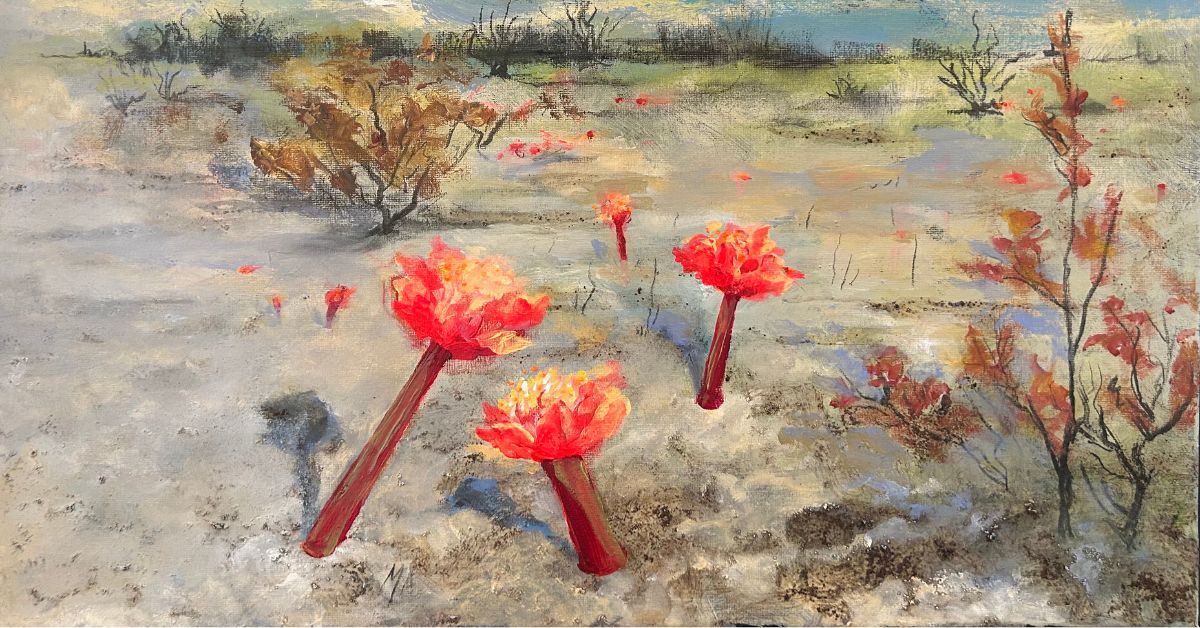
In The Path to Palmiet Beach, the story is one of return. This is a path walked many times, drawn by memory and affection rather than novelty. The painting isn’t about reaching the beach so much as responding to its pull. Pink works differently. Here it appears as atmosphere rather than structure, woven through the path and surrounding vegetation in a way that echoes coastal light settling late in the day. Emotionally, it suggests familiarity — the quiet affection that draws us back to places we love. Technically, pink bridges cooler blues and greens, warming the distance and inviting the eye gently forward rather than pulling it insistently toward a destination.

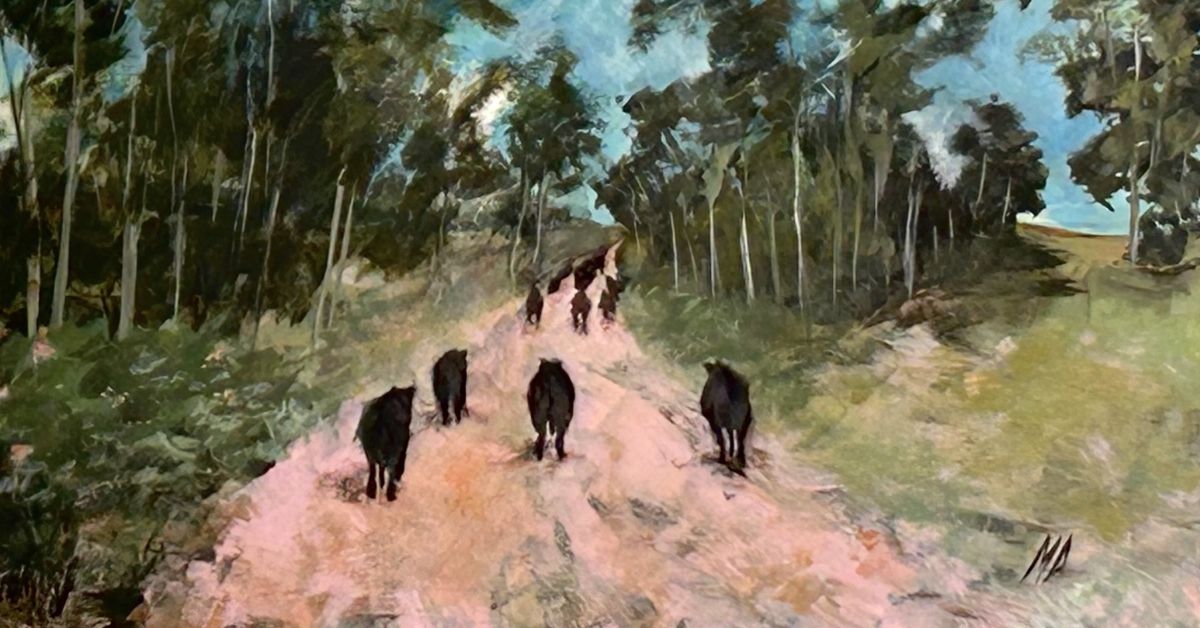
Through the Gums reflects continuity and repetition — cattle moving along a road framed by tall trees, a scene shaped by habit and passage rather than event. The narrative is quiet and enduring. Pink enters more subtly, almost as residue. It appears in the road and filtered through the trees, suggesting repetition rather than novelty. Emotionally, it conveys steadiness — love as continuity rather than intensity. Technically, pink counterbalances the vertical rhythm of the gums, softening their structure and preventing the scene from becoming rigid. The land feels known, held, and enduring.

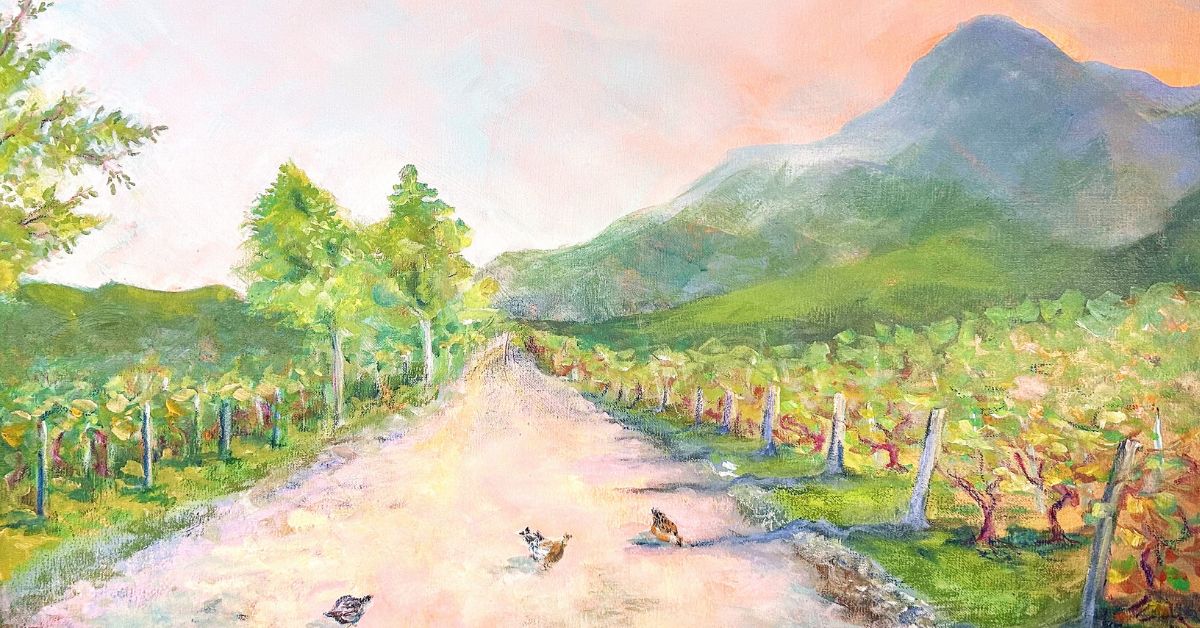
In Spotty Horses, the focus returns to companionship more explicitly. Two riders move through the landscape side by side, without urgency or spectacle. The story is one of shared presence rather than destination. Pink enters the work as contrast and care. Against strong greens and bold mountain forms, it softens both figures and land. Emotionally, it holds tenderness — companionship without urgency, presence without demand. Technically, pink breaks up large colour fields, introducing warmth where the painting might otherwise feel overly declarative. It allows the riders and horses to remain grounded in the landscape while still registering as relational beings.

Across all four works, pink is not decorative, nor symbolic in any fixed sense. It functions more like emotional temperature — warming space, softening edges, and creating conditions where movement, companionship, and familiarity can exist without strain. If love in these paintings is quiet, it is partly because the colour language supports that quietness.
Much like relationships themselves, these choices weren’t made consciously. They emerged through attention, response, and feeling one’s way forward. And yet, there is value in pausing to look back — in examining intuition, understanding how it operates, and recognising why it returns again and again to certain gestures, colours, and forms.
Perhaps that, too, is a form of love: learning to recognise what we have been doing instinctively, and choosing to honour it with understanding.
If you’d like to view the original works referenced in this essay, they can be found on my Original Art page.