Finding My People: Thoughts on Influence, Orientation, and Shared Ground
The Hangklip Art Studios’ first exhibition of the year is currently on at Harold Porter Botanical Gardens, running from 24 January to 5 February 2026.
A group exhibition has an energy all of its own, I find - allowing participants and viewers alike a unique perspective on the work being shown. As I contemplate what this year will hold, seeing my work share space with others has prompted me to think more deliberately about influence, adjacency, and the kinds of artistic conversations I want to be part of going forward.
This isn’t an exhibition review, but rather, an attempt to articulate why certain practices pull at me, what they make possible in my own work, and how difference — rather than similarity — often does the most useful work.
Looking outward, looking inward
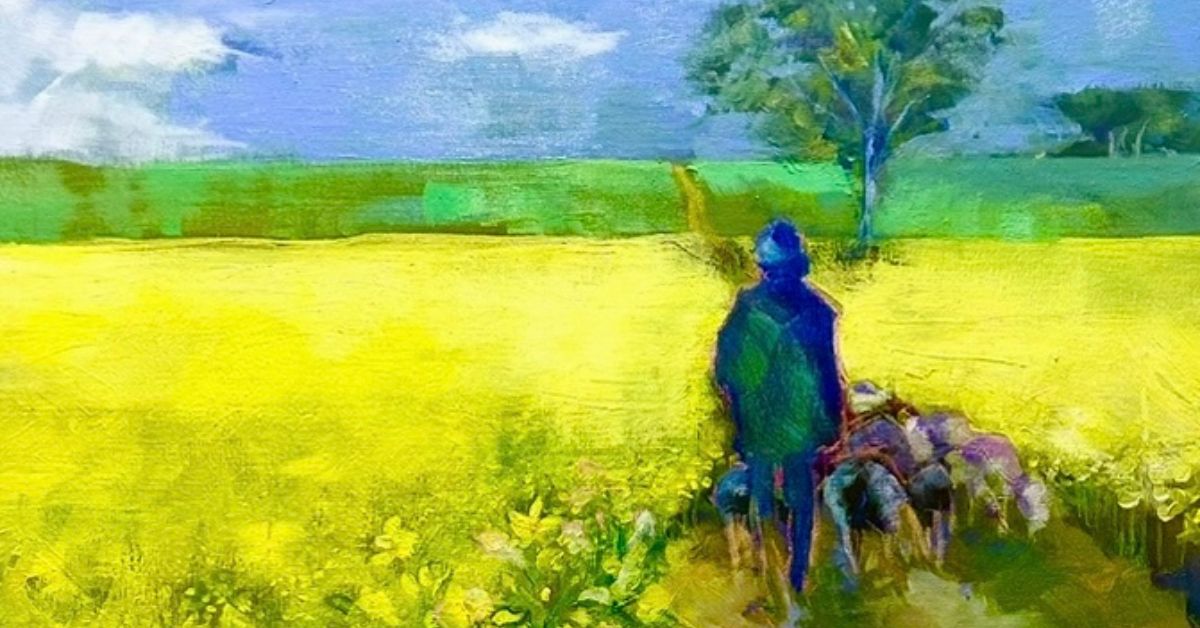
One of my fellow exhibitors whose work continues to intrigue me is John Sweetnam. Even more so now, as I work on incorporating figures into my own paintings — and struggle to find the right balance between realism and impressionism.
John makes no attempt at realism yet his work ignites emotion. His figures resist easy reading. They are symbolic, frontal, sometimes unsettling, and unapologetically psychological. What matters here is not polish, but conviction. His surfaces are:
· Purposefully crude
· Confidently unresolved
· Clearly intentional rather than naïve
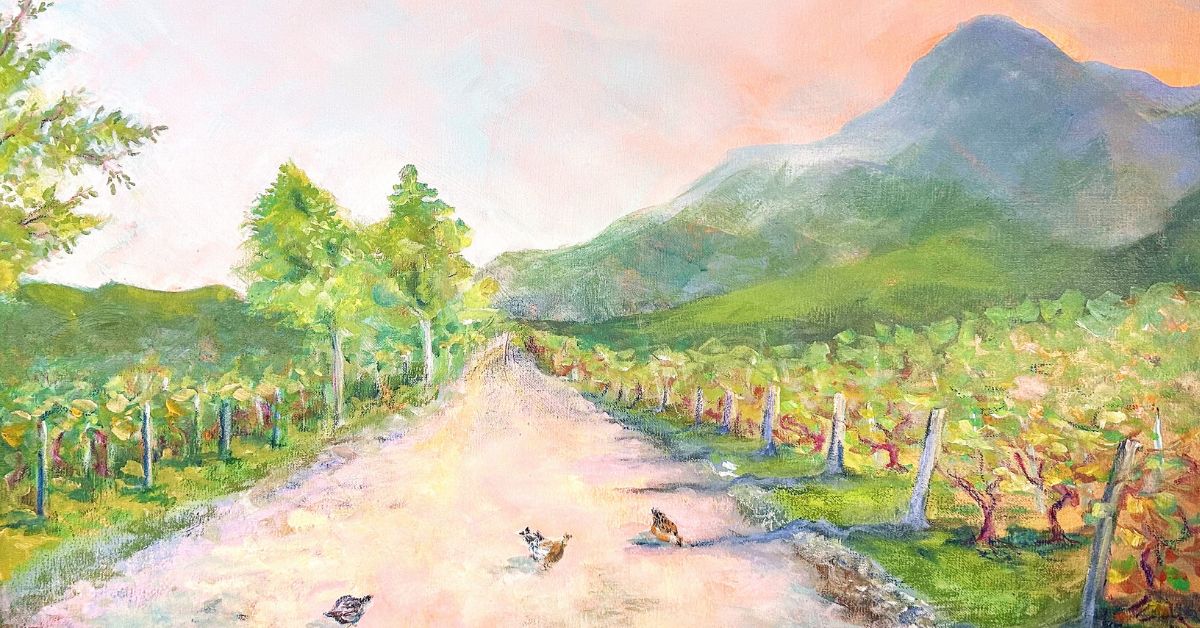
But, in my opinion, their essence lies in their focus. Placing John’s Face & Bird alongside my own Checkmate at Sunrise, a subtle but telling contrast emerges.
My painting feels outward-facing. The road draws the eye forward; the landscape opens. There is a searching quality to it — a sense of looking out and around for input, for what the day might offer. Place functions as an invitation.
In contrast, John’s figure feels decidedly inwardly oriented. The head is sealed, introspective, almost self-contained. Nature appears not as a space to move through, but as something tentative — even difficult — to admit. The bird becomes less a companion than a question: can the external world be allowed in at all?
That difference fascinates me. It suggests that while my work often begins with environment as a point of encounter, his begins with the interior — with the struggle required before connection is even possible. Neither approach resolves the other, but the tension between them feels alive, and worth sitting with.

Embodiment and surface: when experience leads the work
As someone whose paintings often arrive through reflection — memory, place, and a certain narrative distance — I’m struck by how different it feels to encounter work that comes directly out of the body.
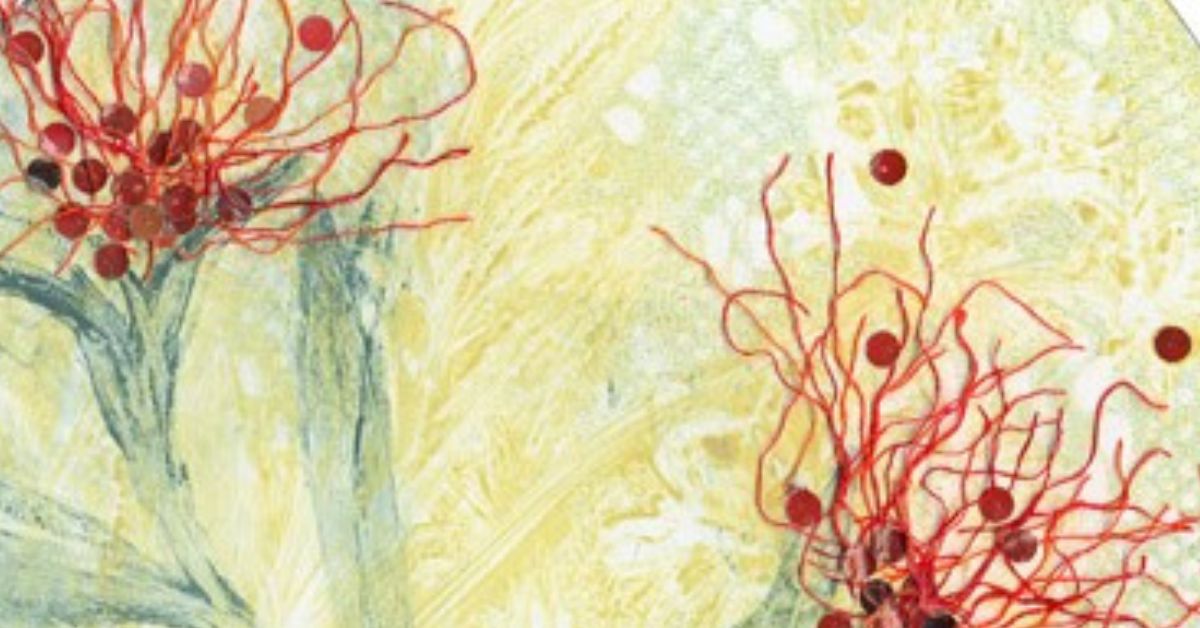
The encaustic and photographic work of Robs Simmons operates firmly in this register. Her relationship with the ocean is not something she stands back from or interprets at arm’s length; it is lived daily, and physical. The work that results feels visceral and materially charged — closer to sensation than story.
What I respond to most strongly is the permission her work gives to let surface remain unresolved. Encaustic, by its nature, resists control. The hot beeswax holds movement and instability, recording action rather than smoothing it away. Meaning is not clarified or explained; it is encountered through texture, weight, and repetition.
In contrast to my own practice — where landscape often becomes a way of thinking, remembering, or orienting myself in relation to place — Robs’ work stays firmly with the act of immersion itself. It reminds me that not all experience needs to be translated into narrative in order to carry depth. Sometimes the material, worked and reworked, is enough.

When material becomes a way through
My connection to the work of Ian Maritz is quieter, and perhaps more tentative.
Unlike some of the other artists I’m drawn to, my connection here isn’t rooted in visual alignment. Instead, it sits at the level of practice — in what it means to continue working with one’s hands, to remain physically engaged with material, when image or language might no longer feel sufficient.
Ian came to clay after a significant life rupture, moving to Betty’s Bay and working initially with found wood gathered on beach walks, before later turning to ceramics. Knowing this doesn’t explain the work — and I don’t want it to — but it does sharpen my awareness of what the work does.

There is a steadiness to it. A sense of weight, repetition, and attention. The surfaces feel worked rather than composed, shaped through touch and time rather than narrative intent. The objects read less as statements and more as traces of immersion — evidence of a sustained, material conversation with place.
What resonates for me is not the backstory itself, but the way material seems to function as a means of staying present. Clay and wood here feel less like expressive devices and more like companions in a process of grounding. That distinction allows me to appreciate the work without needing to absorb it into my own visual language — and without asking it to carry meanings it never set out to hold.
Building an ecosystem, not a style
This exhibition has clarified something important for me: an artistic practice isn’t built in isolation, but neither is it built by proximity alone.
It is shaped by choosing which conversations to enter, which tensions to hold, and which differences to respect.
At this stage, I find myself drawn to artists who:
· prioritise presence over polish
· allow material and intuition to remain visible
· engage with place, body, or interior life from distinct orientations
These relationships don’t dilute my voice. They help me locate it more clearly. Influence, for me, has become less about resemblance — and more about recognising where creative courage lives.
As I think ahead, what matters most to me in future collaborations and shared exhibitions is that any dialogue between practices feels intentional, ethical, and mutually clarifying.
Not everything needs to align.
But when work sits well together, it should do so because it deepens the conversation — not because it smooths over difference.
That’s the ground I’m interested in standing on.